
Beer · Overview · Reference page
A history of beer
From residues in prehistoric stone mortars to global brewing groups and small independent breweries, beer has followed grain, towns, taxes and science. This overview separates the documented record from the stories that grew around it.
The oldest evidence
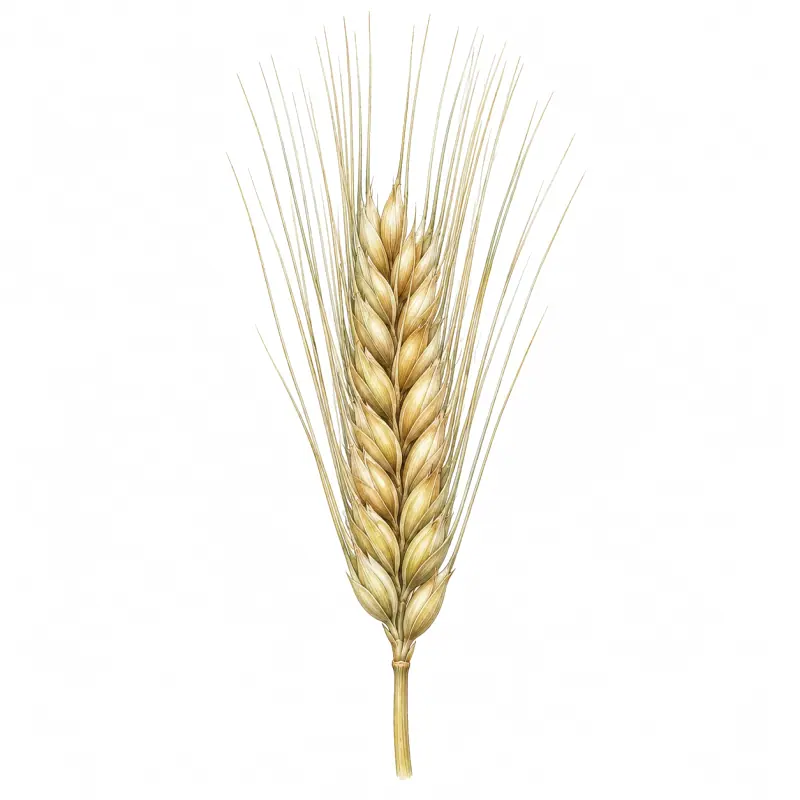
Claims for the "first beer" depend on residues, not recipes. At Raqefet Cave on Mount Carmel, in modern Israel, Li Liu and colleagues analysed three stone mortars from a Natufian burial site dated about 13,700 to 11,700 years ago. They found traces of wheat or barley, oat, legumes and flax, and argued that a cereal beer was brewed there for ritual feasts. They called it the earliest archaeological evidence for brewing, several millennia before domesticated cereals. Other archaeologists, notably David Eitam, read the same mortars as tools for grinding grain and making bread. The claim is open.
In China, residues in pottery jars from the Neolithic village of Jiahu in Henan show a fermented drink of rice, honey and fruit made in the seventh millennium BCE. It was a mixed beverage rather than a beer in the modern sense.
In Egypt the evidence becomes industrial. At Hierakonpolis, vats heated in rows around 3600 BCE held a mash of malted emmer wheat with some barley; chemical work on the residues found dates and phosphoric acid, probably used to flavour and preserve the beer. At Abydos, a brewery of eight production areas, each with about forty pots, probably dates to the reign of Narmer around 3150 BCE (see early Egyptian breweries).
Mesopotamia and the Hymn to Ninkasi
Sumer, in southern Mesopotamia (in modern Iraq), left the richest written record of early beer. The Hymn to Ninkasi, a Sumerian poem to the goddess of beer, survives on three fragmentary tablets from in and around Nippur that are at least 3,900 years old. Its lines describe beerbread baked in an oven, malt soaked in a jar, cooked mash spread on reed mats and filtered beer poured from a collector vat "like the onrush of the Tigris and the Euphrates".
The hymn is often called the world's oldest beer recipe. Specialists disagree. Miguel Civil's 1964 English translation, Walther Sallaberger's 2012 German translation and Veronica Afanasyeva's Russian translation differ on key words: Civil read bappir as "beerbread", Sallaberger as sourdough. The archaeologist Tate Paulette concludes that we do not know exactly how Mesopotamian beer was brewed, and that the hymn is a poem, not a set of instructions.
Monasteries, gruit and the coming of hops
In medieval northern Europe beer was flavoured and preserved with herbs. In the Low Countries, Britain and southern Scandinavia the main additive was bog myrtle, sold as gruit under a "right of gruit": a franchise that let its holder, a lord, a church or later a town, tax brewing. Hops were used beyond bog myrtle's range, and the two ran side by side for centuries.
Monasteries kept the records. In 822 the statutes of Abbot Adalhard of Corbie gave the monastery's porter a tenth of the hops brought in, and told him to obtain more if he had too little "to make his beers": the first dated document to link hops and brewing (statutes of 822). Around 1158 the abbess Hildegard of Bingen wrote that the bitterness of hops "inhibits some spoilage in beverages to which it is added".
Towns, guilds and rules
Hopped beer kept and travelled, and it became a trade good. By the thirteenth century Bremen was exporting it to the Low Countries; Hamburg, the beer town of the Hanseatic League, had 457 hop breweries by 1369. Towns in the northern Netherlands were licensed to brew hopped beer by 1320. In 1364 the bishop of Utrecht complained that a "new method" of brewing with hops had cut his income from gruit. Gruit duties turned into taxes on hops and then into excise on beer.
Brewers organised. London's brewers appear as an organised body in 1292, and on 22 February 1438 Henry VI gave the Brewers' Company a charter to govern all liquor made from malt in the City. Rulers regulated ingredients and prices: the Bavarian ordinance of 1516 allowed only barley, hops and water, following earlier town rules such as Munich's of 1487.
Industry, cold and microbes
From the 1720s the great London brewers made porter, a hopped and aged brown beer, on a large scale, and its stronger versions gave rise to stout. In 1844 the Spaten brewery in Munich became the first outside England to use steam power.
Lager needed cold. Before machines, brewers packed cellars with ice cut from frozen lakes. In 1873 Gabriel Sedlmayr of Spaten had Carl von Linde install an experimental refrigeration machine, the first mechanical refrigeration in a brewery (Linde at Spaten), and Spaten could then brew bottom-fermented beer all year. In Plzeň, Bohemia (now the Czech Republic), the Bavarian brewer Josef Groll brewed a golden lager in 1842 that became the model for pilsner.
Science explained fermentation. After the war of 1870 Louis Pasteur studied the "diseases" of beer and argued that every change in wort and beer comes from living ferments; he published [[beer.event.pasteur-etudes-sur-la-biere|Études sur la bière]] in 1876. In 1883 Emil Chr. Hansen at the Carlsberg Laboratory in Copenhagen showed that wild yeasts caused "beer sickness", isolated a single good yeast cell and brewed with a pure culture from November that year.
Pale lager and the brewing groups
Pale lager travelled. Pilsner reached the United States in 1874, and the Plzeň brewery registered "Pilsner Bier" as a trademark in 1859 and "Pilsner Urquell" in 1898. Ownership has concentrated: the Plzeň brewery was owned by the SABMiller group from 2005, and in May 2016 the European Commission cleared AB InBev's takeover of SABMiller, joining the world's two largest brewers, on condition that almost all of SABMiller's European business was sold.
The independent revival
Against the big groups, small brewers revived forgotten styles. In 1966 Pierre Celis brought back witbier in Hoegaarden, nine years after the last white-beer brewery there closed. British porter returned in 1978, and IPA was rediscovered by craft brewers in the 1980s. UNESCO's 2016 listing of Belgian beer culture notes that craft beer has been popular there since the 1980s.
"Craft" is not a legal category. In the United States the trade body, the Brewers Association, defines a craft brewer as small (6 million barrels a year or less) and independent (less than 25 % owned or controlled by a non-craft alcohol company).
How it connects
History
- related Raqefet Cave: the oldest beer claim
- related Jiahu: a Neolithic fermented drink
- related Early Egyptian breweries: Hierakonpolis and Abydos
- related The Hymn to Ninkasi
- related Hops in the statutes of Adalhard of Corbie
- related Charter of the Brewers' Company of London
- related The Bavarian beer ordinance of 1516 ('Reinheitsgebot')
- related The first Plzeň pale lager
- related Linde's refrigeration machine at Spaten
- related Pasteur's Études sur la bière
- related Hansen's pure yeast culture at Carlsberg
Method
- related Malting
Region
- related Belgium
Style
- related Porter
- related Pilsner (Czech pale lager)
- related India pale ale (IPA)
Continue exploring
- StoryOther drinks: mead, cider, rice wine, palm wine, cacao and spa waterPeople's Republic of China
- IngredientBarleyHordeum vulgare
- IngredientHopsHumulus lupulus
- MethodMaltingMalting
- RegionBelgiumBelgium
- StyleIndia pale ale (IPA)Recognised style
- StylePilsner (Czech pale lager)Recognised style
- StylePorterRecognised style
 RecipeBelgian fritesBelgium
 RecipeBoulets à la liégeoiseLiège, Belgium