
Whisky · Maker · Short entry
Springbank
A Campbeltown malt distillery licensed in 1828 and still controlled by the company of the Mitchell family line, J & A Mitchell & Co. It malts its own barley on floors and makes three single malts on one site: Springbank, Longrow and Hazelburn.
Status
Since the death of chairman Hedley G. Wright in 2023 the company has been held in three trust funds (company's account); Companies House lists individuals, not a drinks group, as persons with significant control.
History
By the company's own account the Mitchell family came to Campbeltown in the 1660s, and in 1825 Archibald Mitchell became a partner in the Rieclachan distillery. Springbank was built in 1828 on the site of his earlier illicit still and became the town's 14th licensed distillery. Historic Environment Scotland's listing quotes Alfred Barnard, who wrote that it was built "by the father-in-law of the present proprietors (J & A Mitchell & Co)", so the founder named in the sources differs.
Archibald's sons John and William took over in 1837; John later formed J & A Mitchell with his son, a company incorporated in 1897. After the collapse of Campbeltown distilling only Springbank and Glen Scotia were left in 1934. Production was sporadic in the 1980s and became regular again in 1989. Longrow was first distilled in 1973 and Hazelburn in 1997. Chairman Hedley G. Wright, Archibald's great-great-grandson, died in 2023, and ownership passed into three trust funds.
Place
Springbank stands in the centre of Campbeltown, at the southern end of the Kintyre peninsula, in the protected locality of Campbeltown. The town once had more than 30 distilleries; today three operate, and two of them, Springbank and Glengyle, belong to J & A Mitchell. Historic Environment Scotland lists the site as a complex whose earliest buildings date from 1828, with a still house, malt bins, mash tun, a kiln linked to maltings and a barley loft, a cooperage, bottling halls and warehouses. The company says it also uses buildings of the former Longrow, Rieclachan, Union, Springside and Argyll distilleries. Its water comes from the hills around the town.
Making
Barley is steeped for up to three days, spread about 15 cm (six inches) deep on the malting floors and turned by hand. It is kilned for 30 to 48 hours over peat, hot air or both, depending on which malt is being made. A 1940s Porteous mill grinds the malt, and a cast-iron mash tun about a century old takes three waters. Fermentation in six larch washbacks lasts up to 110 hours.
There are three copper stills: a wash still heated by a live flame, a low wines still and a spirit still. Springbank is distilled two and a half times, Longrow twice and Hazelburn three times. Casks mature for at least three years in dark, damp warehouses. The company says it never chill-filters and never adds colouring, and it bottles on site.
Character
The distillery describes Springbank as lightly peated and distilled 2.5 times. Its notes for the 10 year old, matured in bourbon and sherry casks, speak of cereal, fruit and a sweet, salty finish, and its notes for older bottlings point to what it calls a maritime influence. The three malts differ in how the malt is kilned and how often they are distilled; Longrow, first made in 1973, was meant to show that an Islay-style malt could be made on the mainland, and Hazelburn is distilled three times. The company claims that it alone in Scotland completes every stage from malting to bottling on one site.
How it connects
Region
- in Campbeltown
Maker
- related Glengyle (Kilkerran)
- related Wm Cadenhead
Style
- related Single Malt Scotch Whisky
Continue exploring
- CountryUnited Kingdom97 entries in the atlas so far
- MakerWm Cadenhead1842 (Aberdeen)
- MakerGlengyle (Kilkerran)1872; rebuilt, first new spirit 2004
- RegionCampbeltownCampbeltown, Kintyre, United Kingdom
- StyleSingle Malt Scotch WhiskyLegal category
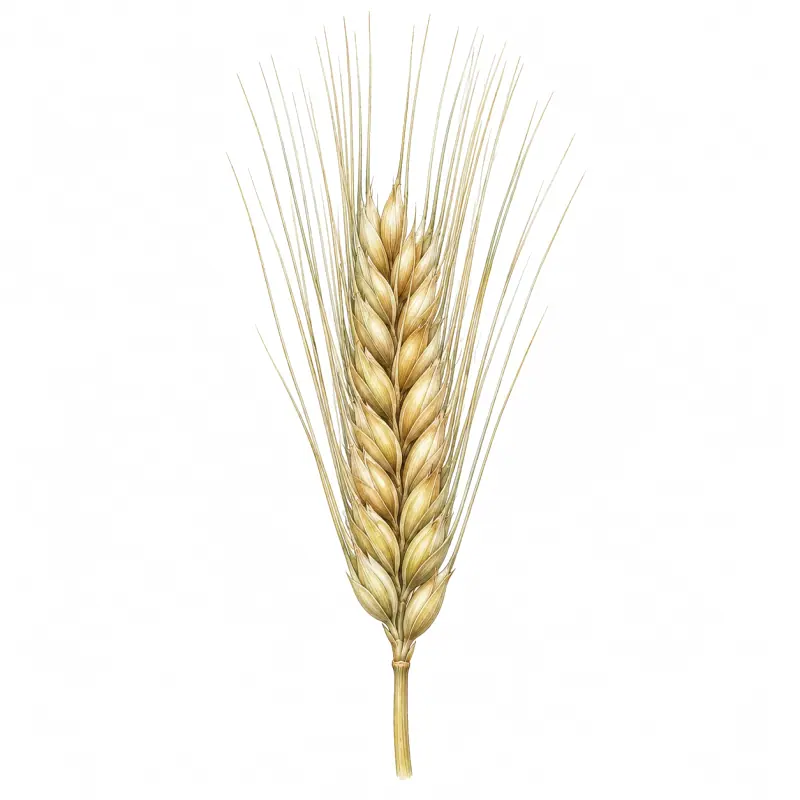 IngredientBarleyHordeum vulgare
- MethodPot still distillationDistillation
- RegionScotlandScotland (United Kingdom), United Kingdom
- StyleScotch WhiskyProtected name
- MakerAbhainn Dearg2008